
Autonomic Dominance
SNS is associated with stressful, dangerous, and active situations. When experiencing an extremely dangerous situation, like an encounter with a lion, the SNS enters a response called the ‘fight-or-flight’ response. In majority of daily life, we are not in full blown ‘fight-or-flight’, our body maintains a balance of SNS and PNS pathways to keep us in homeostasis. When we are in a state of stress in daily life, the sympathetic branch becomes dominant and the parasympathetic branch becomes repressed. This imbalance in favor of SNS is termed sympathetic dominance. It defines human condition: humanity as a whole suffers its consequences. It causes the body to mostly operate on sympathetic stimulation which causes many negative health effects.
The figure above shows the potential effects of sympathetic dominance. Stress is its first symptom; it can be mental and physical. Sympathetic dominance puts the body under stress. Under the influence of sympathetic dominance, blood flow to the internal organs is reduced and directed towards our muscles to be able to become active for any event. This causes our bodies to go into a catabolic state (breakdown state) since we have to use our resources for more energy. Our bodies also produce a lot of cortisol which is a hormone that is released when the body is in need of using the stored energy. During high levels of cortisol, we have breakdown of skeletal muscle proteins, with an overall high demand for energy sources. There is also a change in the calcium balance, leading to breakdown of bone tissue. In terms of brain function, cortisol is responsible for mood changes and differences in learning abilities. The overactive SNS does not allow the body to go into an anabolic state to repair, build, and digest since it represents the parasympathetic system. Some of the symptoms of a dominant SNS are: restlessness, trouble sleeping, decreased immune system function, anxiety, fast heart rate, tense muscular system, shallow breathing caused by fast heart rate and tense abdominal muscles, decreased libido, and the feeling of fatigue most of the time.
The SNS is an essential part of our nervous system; our survival depends upon it. However, an overactive and dominant SNS is an unbalance which strays the body away from homeostasis (balance).
Constant worry and dwelling on certain events in the future or past are likely to stimulate our sympathetic nervous system and increase our cortisol levels. Our response is perfectly normal, but our body thinks that our stress over future events is real immediate danger and wants to protect itself. The practices of regulated breathing and meditation are helpful in controlling negative emotions, and the many physiological changes that are produced through these emotions. These practices enable you to calm your body and enter into a state of lowered sympathetic activity and shift toward parasympathetic activity. A slowed down heart and breathing rate induce calm through the body-mind complex. Focused on our breath and in a state of inner peace, our emotions are not able to push our body into a threatened state of mind. These positive changes can happen almost immediately, just like how the fight-or-flight response can activate in the snap of our fingers.
Reference:
Silverthorn, Dee Unglaub. 2007. Human physiology: an integrated approach. San Francisco: Pearson/Benjamin Cummings.
****************
Being in a state of constant stress causes dominance of our sympathetic nervous system. This results in release of stress response hormones in times of no immediate danger. This overstimulation has many short term effects and can potentially cause long term effects.
Stressful events and their responses are not the same for everyone, it is based on brains emotional and memory processing. This response happens in the amygdala where emotion is processed and a signal warning about the stressor is sent to the hypothalamus.
The hypothalamus is then able to activate the sympathetic part of our autonomic nervous system. Cortisol is released through a pathway involving the hypothalamus and the pituitary gland in response to the stress response.
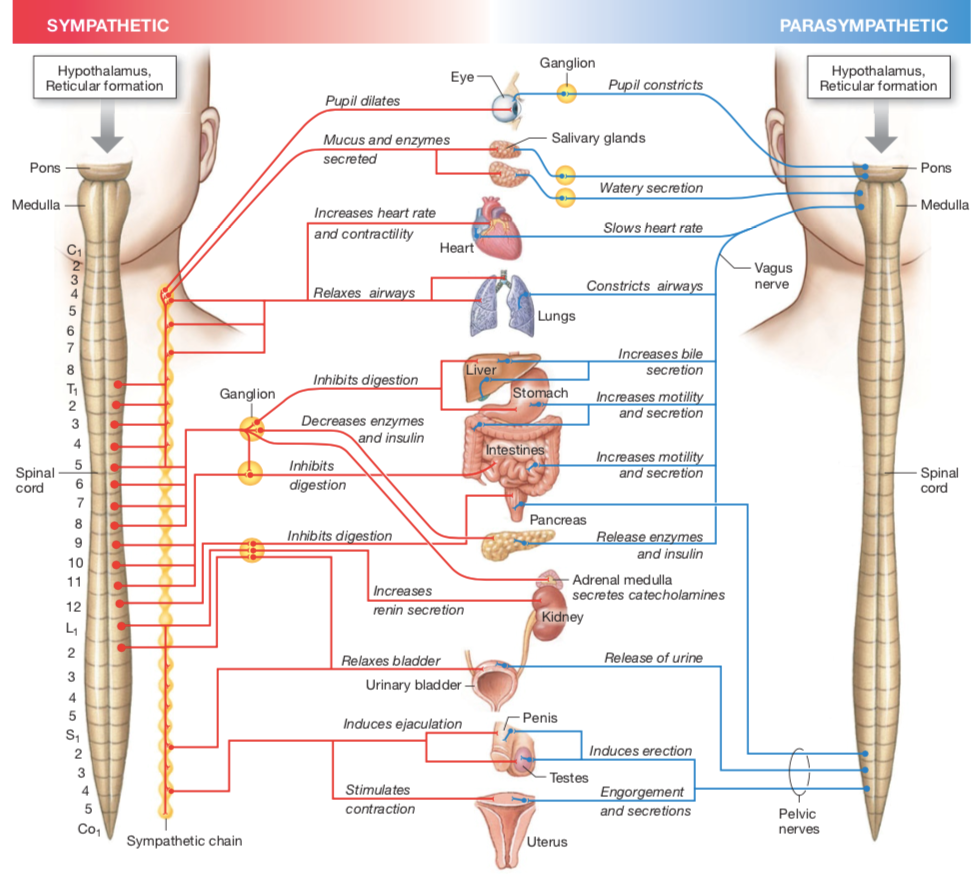
The sympathetic nervous system then sends signals to the adrenal glands, along with many other areas of the body mentioned in the table above. The adrenal glands release adrenaline and cortisol. Adrenalin release, through cascade, causes increased blood glucose, fatty acids, and more energy production within body's cells. Adrenalin release even further increases the heart rate, contracts blood vessels and dilated air passages. Changes allow more blood to get to the muscles and get more oxygen to lungs, so physical performance increased in times of danger.
If the sympathetic nervous system is constantly active it will cause the body to focus on survival which will require sacrificing certain processes and different organ systems. The digestive system, reproductive system and endocrine system organs start to break down from lack of nutrients and blood flow.